
#week 03
A Slide
history – slide
The slide is a much-loved ride at modern fairgrounds and children’s playgrounds across the UK. Including fun fairground classics such as Giant Astroslides or Helter Skelters, slides have been part of funfairs for decades. But where did slides come from? This children’s favourite might be more modern than you think!
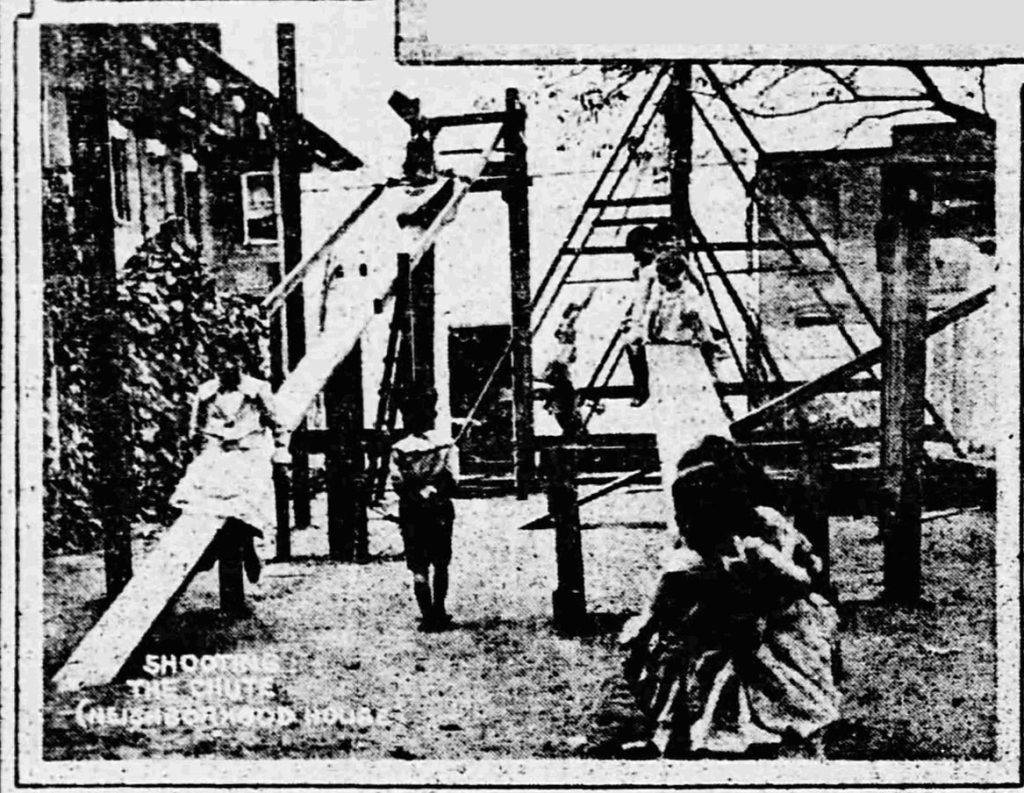
The earliest known slide was built in 1902 in Washington DC, and in May 1903 a brand new bamboo slide was introduced to Coney Island. This new entertainment instalment was a big hit for people across New York, especially children visiting the well-known children’s play site.
It was a few decades before this slide came over to the UK! It was Charles Wicksteed who created the first slide for children in England. In 1922, his manufacturing company, Wicksteed, built a huge slide in Wicksteed Park for children of all ages to enjoy.
This was the first of its kind, and it measured over 30 feet in length. Unlike slides at playgrounds or funfair rides today, there were no safety regulations, and lots of children tried to slide down this fun ride at once!
Originally, Charles Wicksteed created the slide just for boys, but he then went on to create an even better slide for all the young girls who wanted a turn. He was one of the first people to push for girls to also get the chance to enjoy fun rides, slides and other thrilling entertainment. After all, why should the boys get all the fun?
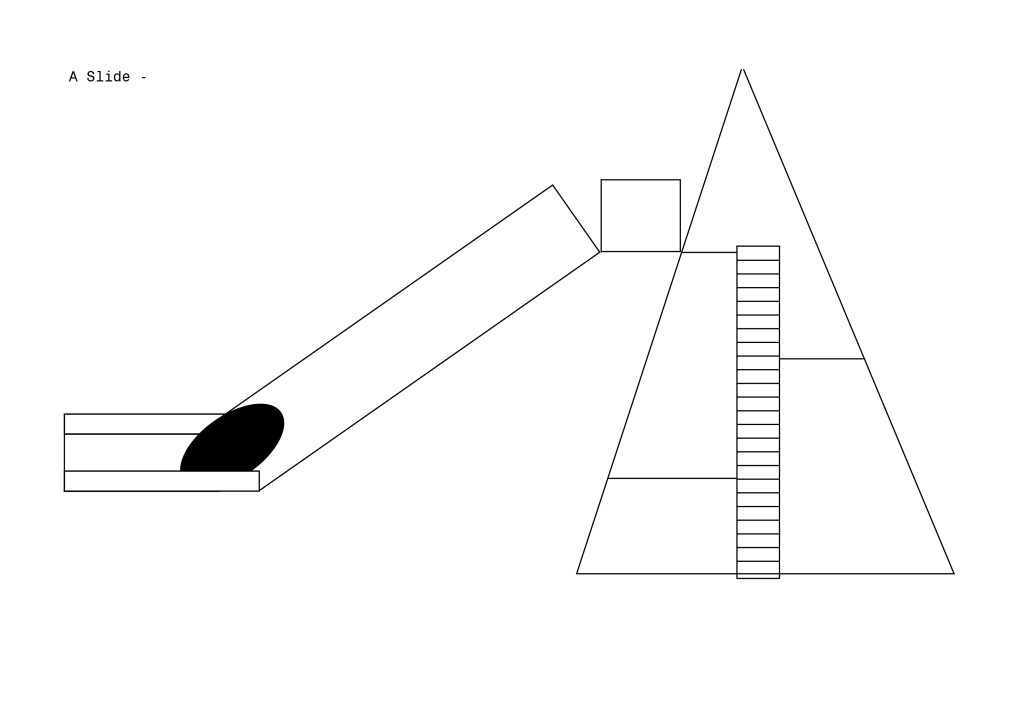
method – diagram + mapping + description
· Redesign the diagram
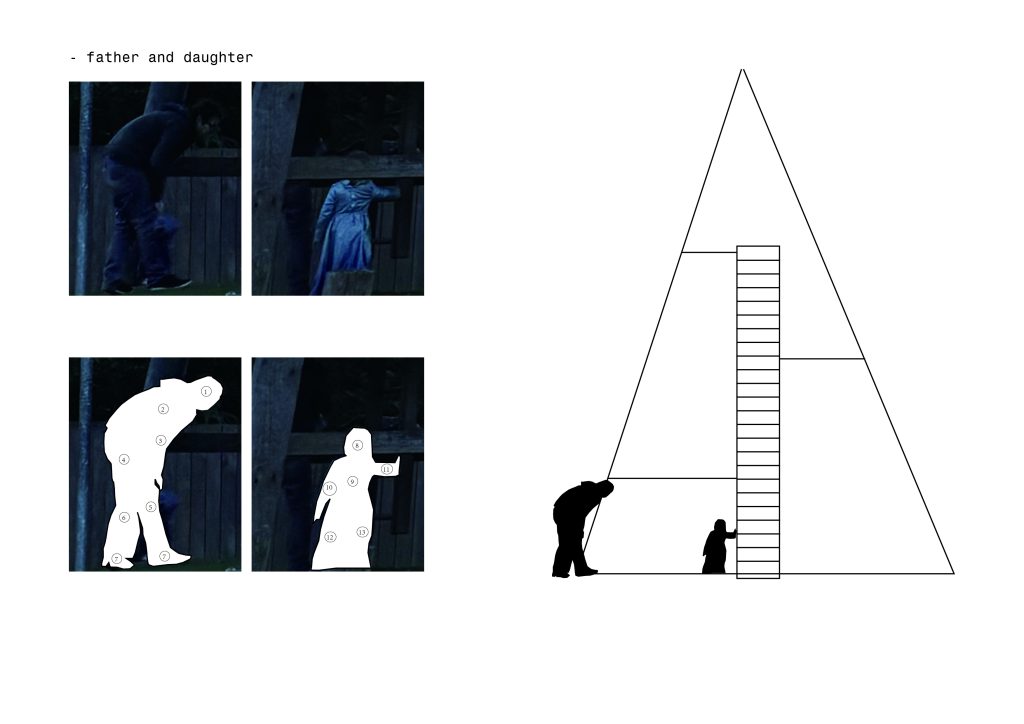
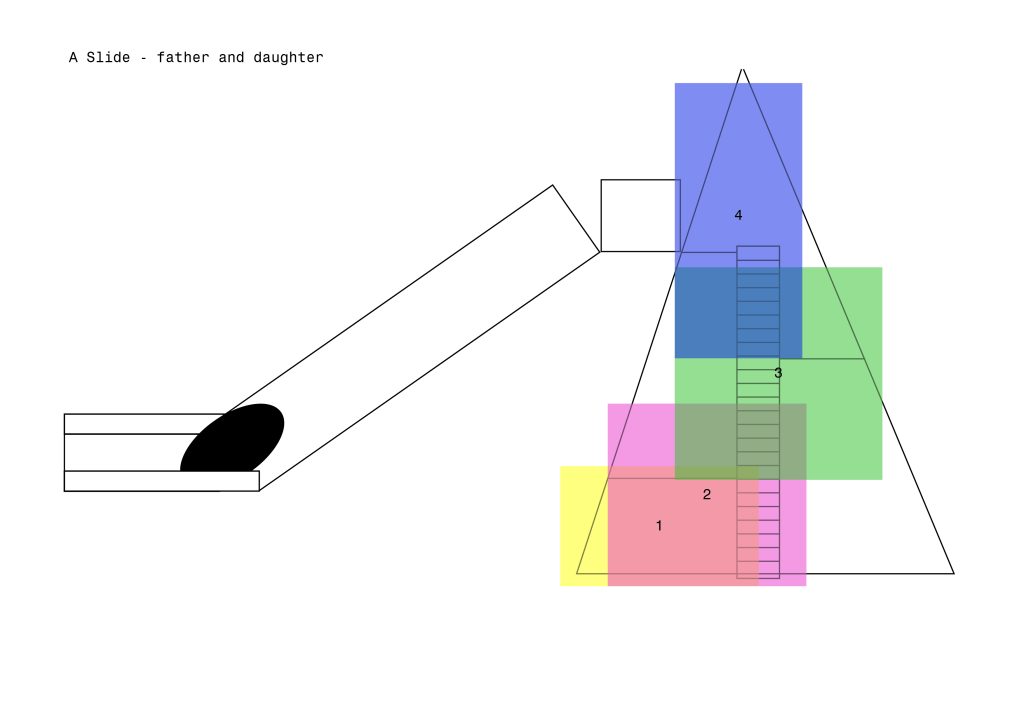
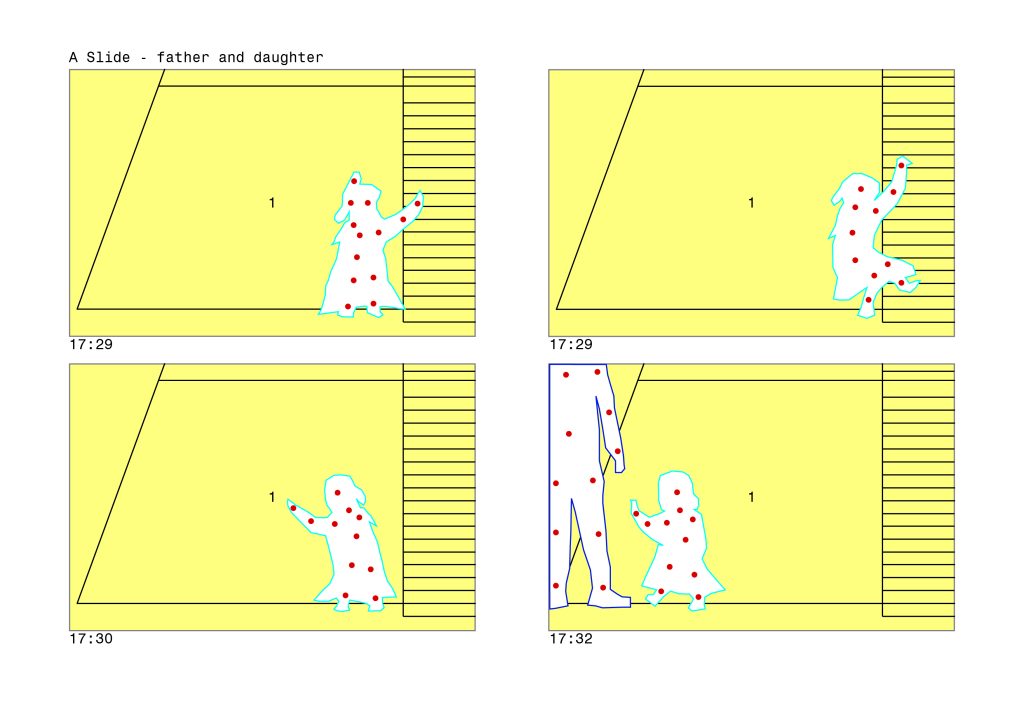
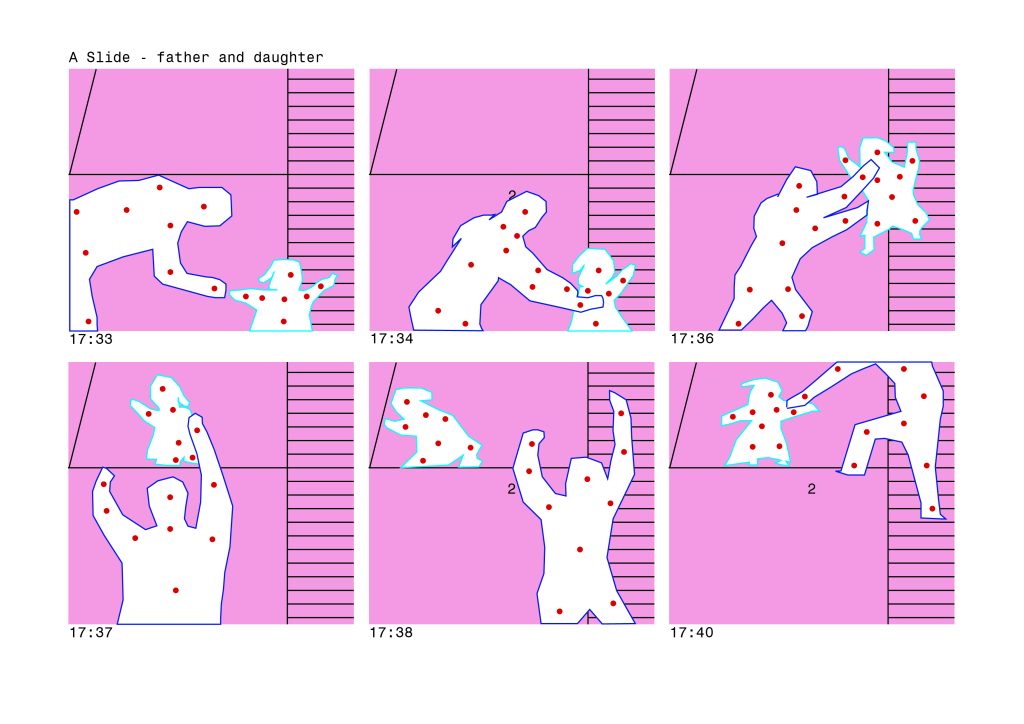
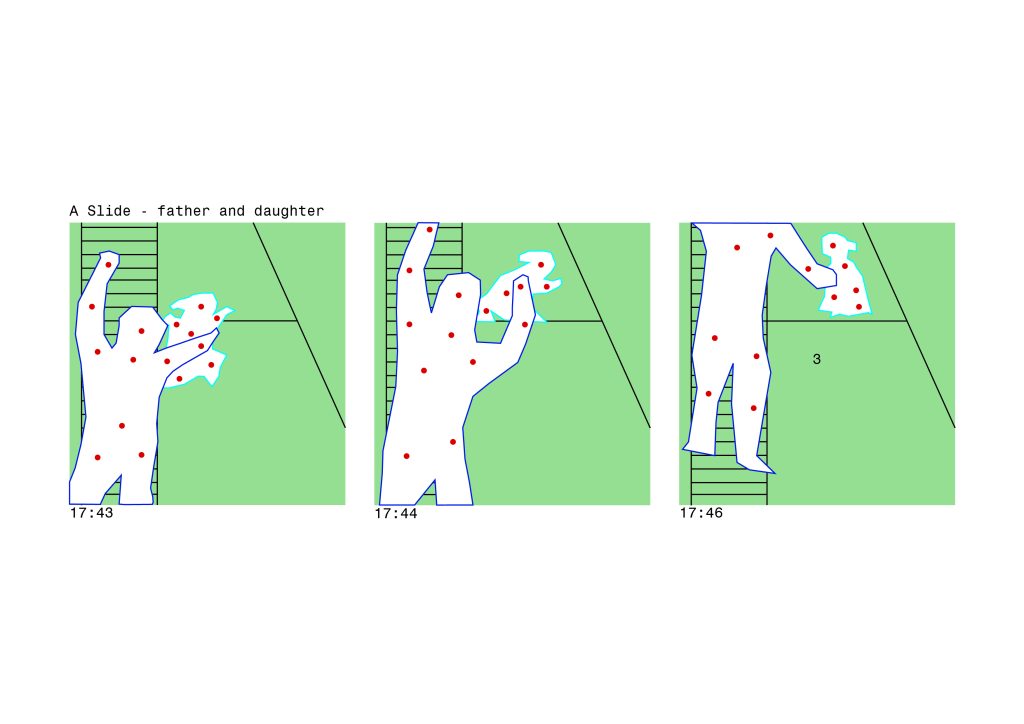
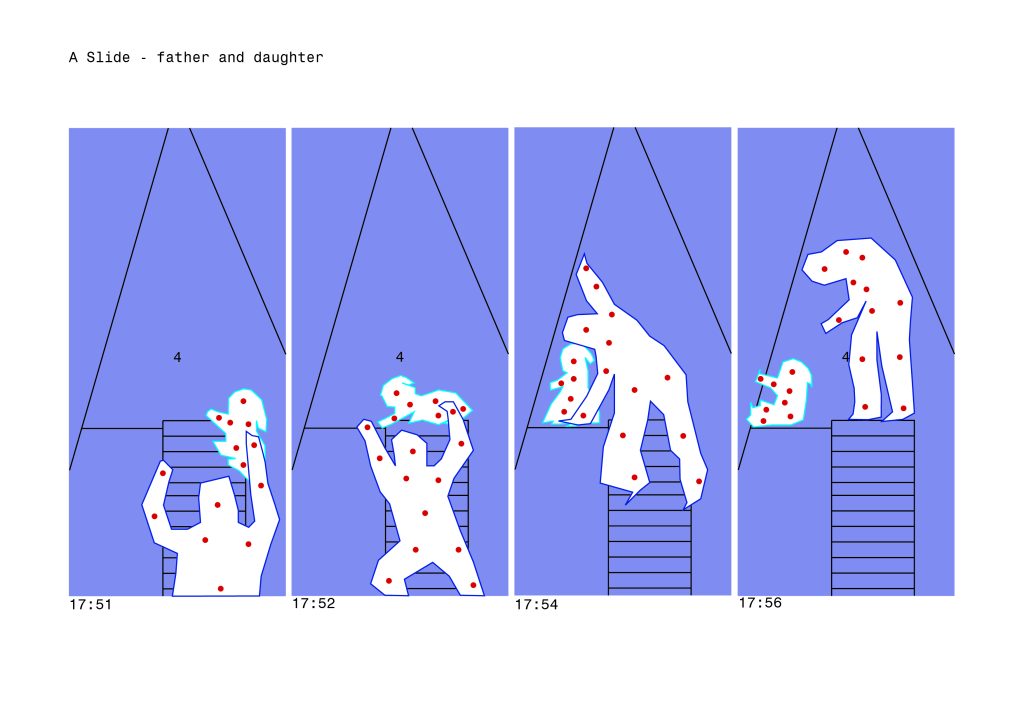
· Narrative story(father&daughter)in diagram way
· Narrative environment
· People see the red dots (joints of the body) first, and then the outline, which can be better visualised in 3D through 2D shapes and descriptions
· Because the child can not be photographed and recorded, I hope that through the two-dimensional shape diagram, more intuitive expression of my first perspective and the information I can record (in a few seconds)
· Basic tracing and detailing of the father’s and daughter’s forms


?Question
Is the point of this slide that it requires the father and daughter to act together to complete the experience of the slide? How can the child or parent be made aware of the dangers of the slide? How can the child and parent be guided to experience the slide together? Why don’t most parents accompany their children on the slide? Why do most parents stay away from areas full of children? Is a slide meant to be a place for parents and children to play together? What will the slide of the future look like?